
Signet vs Logo — What to Choose as a Fashion Brand
You built your brand yourself, or with a little help, when you were just getting started. The logo did the job. It got you here.
But something has shifted.
You’re in conversations with better stockists, more conscious producers, a growing community that actually cares about what you stand for. And quietly, the thing that was never quite right about your visual identity is starting to matter more.
It’s not just the logo. It’s that your brand no longer looks like what it is.
Here’s something worth considering at this stage: the difference between a word mark and a signet, and why one of them might be exactly what’s missing.
The Trend Worth Pushing Back On
The past few years, labels across the fashion industry have been reaching for the same thing: clean, minimalist typefaces. Simple word marks. Nothing too loud.
A lot of them end up looking the same. Exchangeable. Like the brand could belong to anyone.
That’s not a fatal mistake. If you’re building strong differentiation through your visuals, campaigns, and content, a neutral word mark can work. But there’s another option. One that gives you more to work with, both in storytelling and in actual product design.
That option is a signet.

The Pattern We Keep Seeing
This is exactly what we’ve been noticing at the studio lately, and it’s a pattern we find genuinely exciting.
The brands that reach out to us have often started with a DIY logo a few years back. Something a friend put together quickly, or a Canva design that was good enough to get going. And it served them well. It got them here.
But now they’ve outgrown it. They’re pursuing better partnerships: more conscious stockists, more aligned producers. Their audience has grown and matured alongside them. They care deeply about aesthetics, because their products embody exactly that. And they want a visual identity that reflects it.
They want to stand out. To have something recognizable. A mark that their community can identify at a glance.
That’s when a word mark alone isn’t enough anymore. That’s when a signet becomes not just useful, but necessary.
And here’s the good news: this in-between phase—when your business is shifting, when you know something needs to change—is actually the perfect moment for a full or partial rebrand. You can use the momentum.
What This Looks Like in Practice
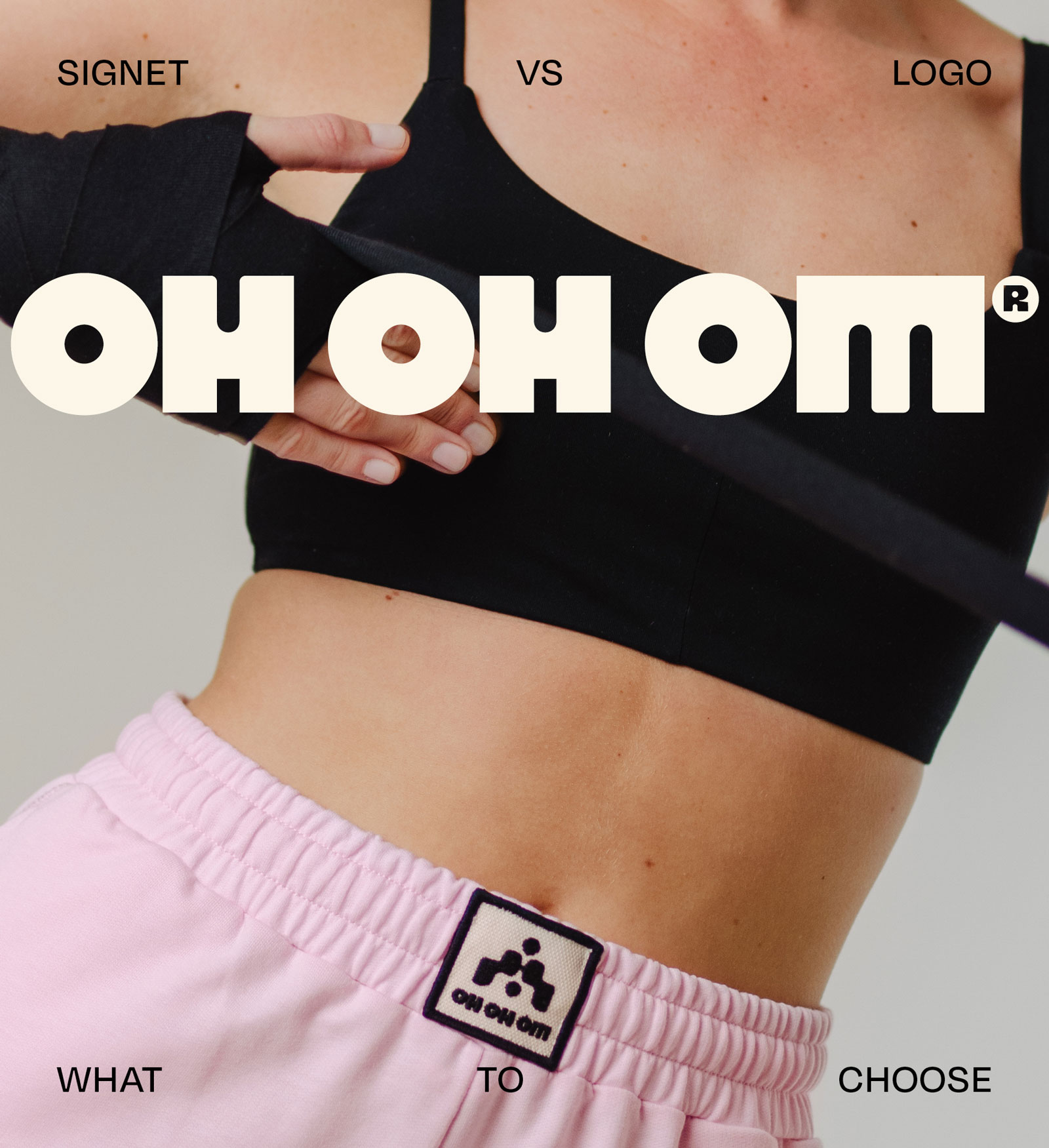
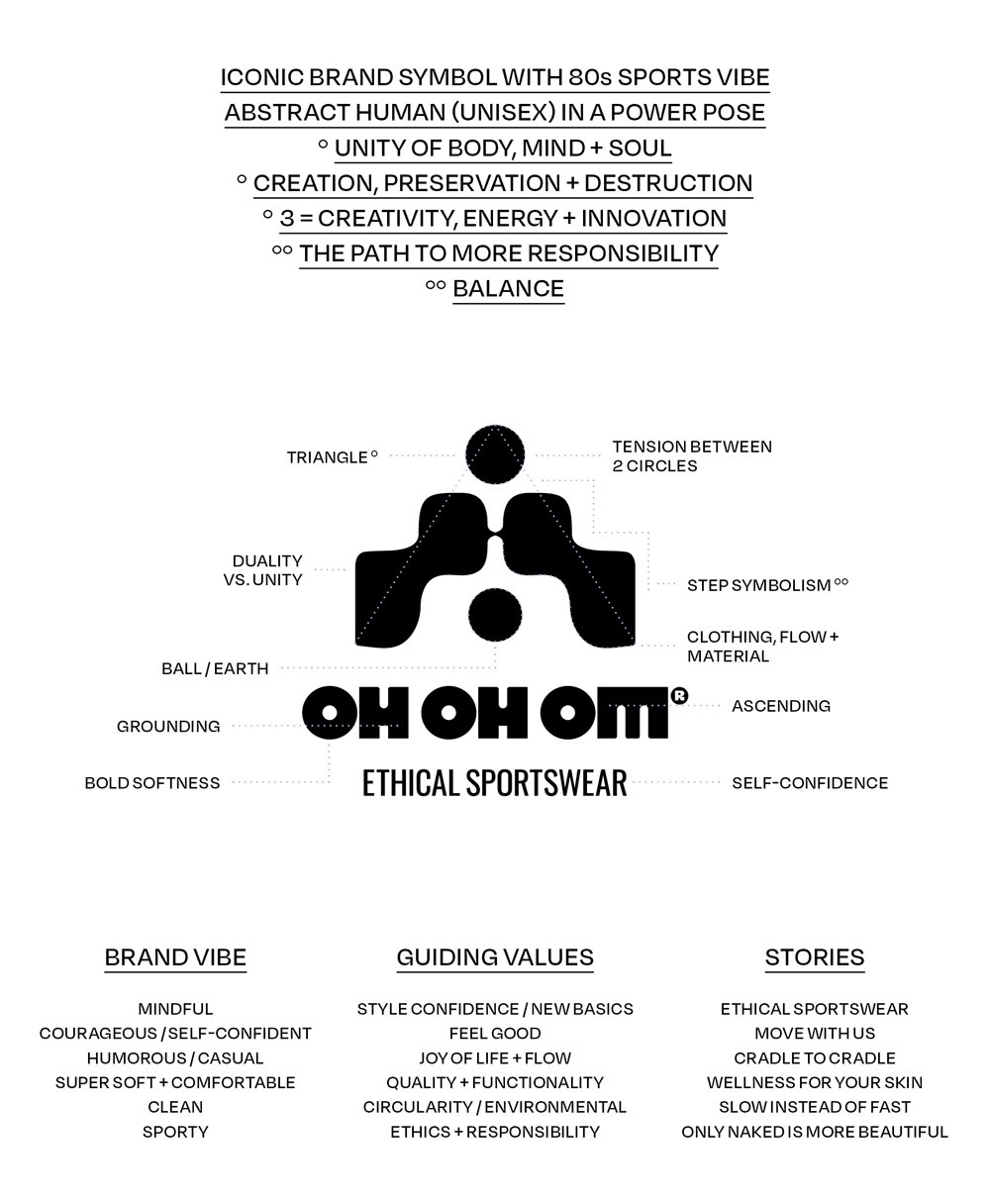
A good example of this is our work with OH OH OM®, an ethical sportswear label.
Their founder came to us because she wanted to create branded clothing—shirts, caps, and so on. They already had a word mark, but it wasn’t versatile enough. It didn’t work at small scales, didn’t translate well onto products, and didn’t leave much room to play.
So we started with a signet.
Then, during our strategy and design process, something else became clear: the existing word mark wasn’t representing who they were anymore. Not their values, not their aesthetic, not where they were headed. The new signet needed a new word mark to match. A whole brand world, not just separate fragments.
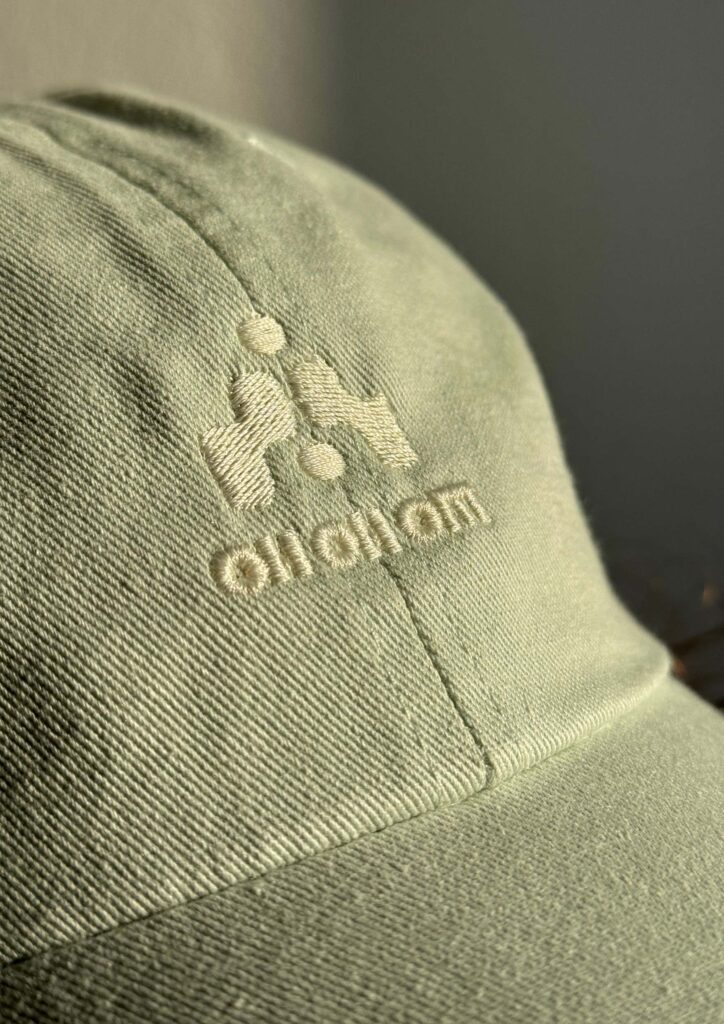
After the rebrand, they could finally create the products they’d been imagining. Caps, socks, embroidered pieces. Things that simply hadn’t worked before.
Two years on, we’re now working together on their brand colour palette. Gradual, unhurried, on their own timeline. That’s exactly how we like to work.
When a Signet Makes Sense: Think of Ganni
Before we get to the self-assessment questions, it helps to see what a signet can actually do in the wild.
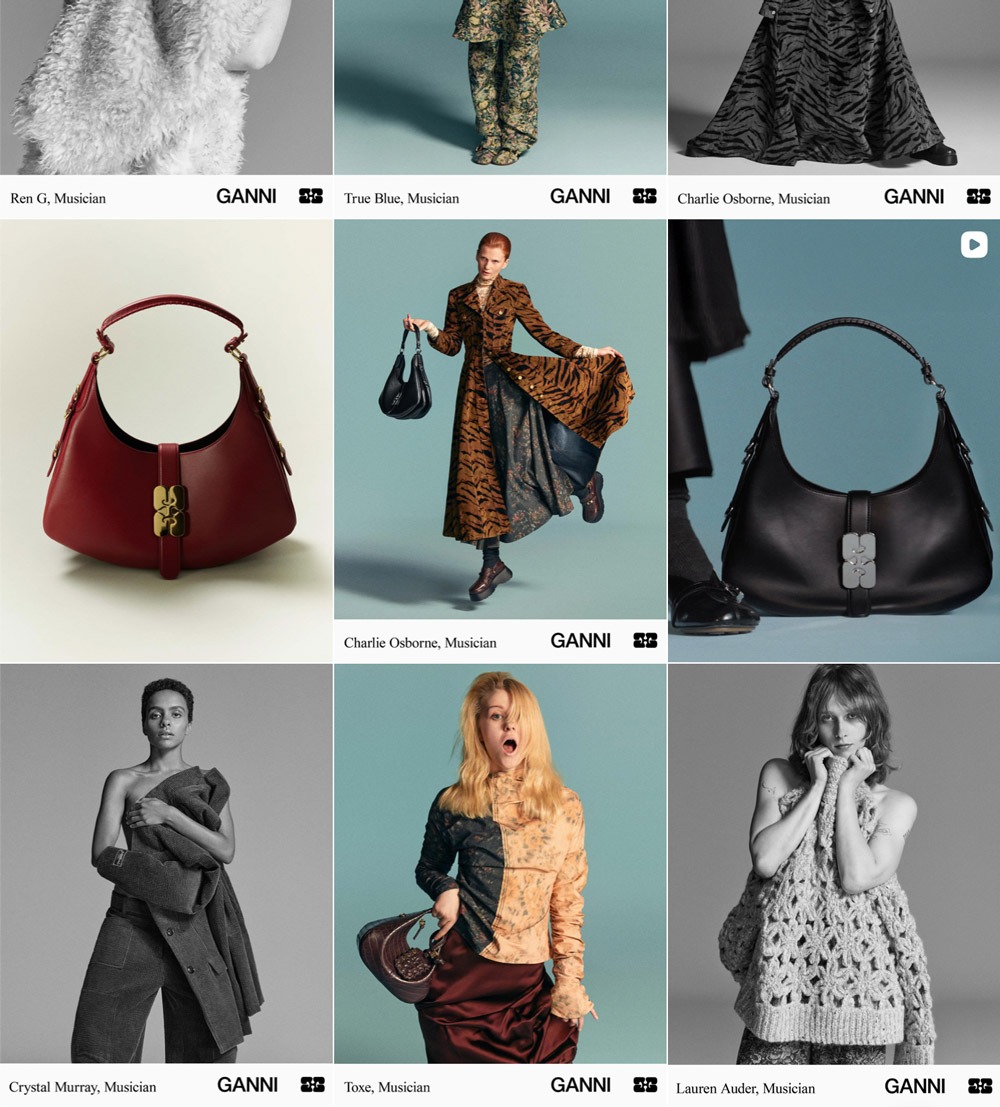
Ganni is a useful reference point here. Not because their brand values align with the labels we work with, but because their signet does something instructive. It appears on a bag buckle. No word mark, no brand name. Just a small, considered mark that carries the whole identity in a single hardware detail.
That’s the power of a well-crafted signet. It lets your brand live on your products, not just beside them.
Signet vs Logo: Signs It's Time to Choose
Signet vs Logo for Fashion Brands
Ask yourself:
- Can you place your word mark on your products easily—in terms of proportions, readability, and feasibility?
- Is your word mark too dominant when placed on clothing, or does it sit just right?
- Do you need a smaller, more compact option for embroidery, prints, or product elements like buckles or labels?
- Would you rather have a mark that carries a feeling—a connotation, a subtle signal—than always leading with your brand name?
If you’re nodding at any of these, it might be time to consider adding a well-crafted signet to your visual identity.
A signet can be a monogram. It can be a more abstract form. A stamp-like mark. Something that belongs entirely to your brand and nothing else. In our eyes, it’s the master discipline in brand design—and one we love getting into.

Ready When You Are
If any of this resonated, if you’re somewhere in that in-between phase where your brand is growing but your visual identity hasn’t caught up yet, we’d love to hear about it.
A signet isn’t right for every brand. But for the labels we work with, it tends to become the element they didn’t know they needed. The thing that makes the whole identity finally feel complete.
Mindt® Studio works with independent, ethical fashion and product brands ready to invest in design that lasts.
If that’s you, let’s talk.

No Comments.